3 Realities About Ultherapy 3 Months Later That Clinics Don't Tell You
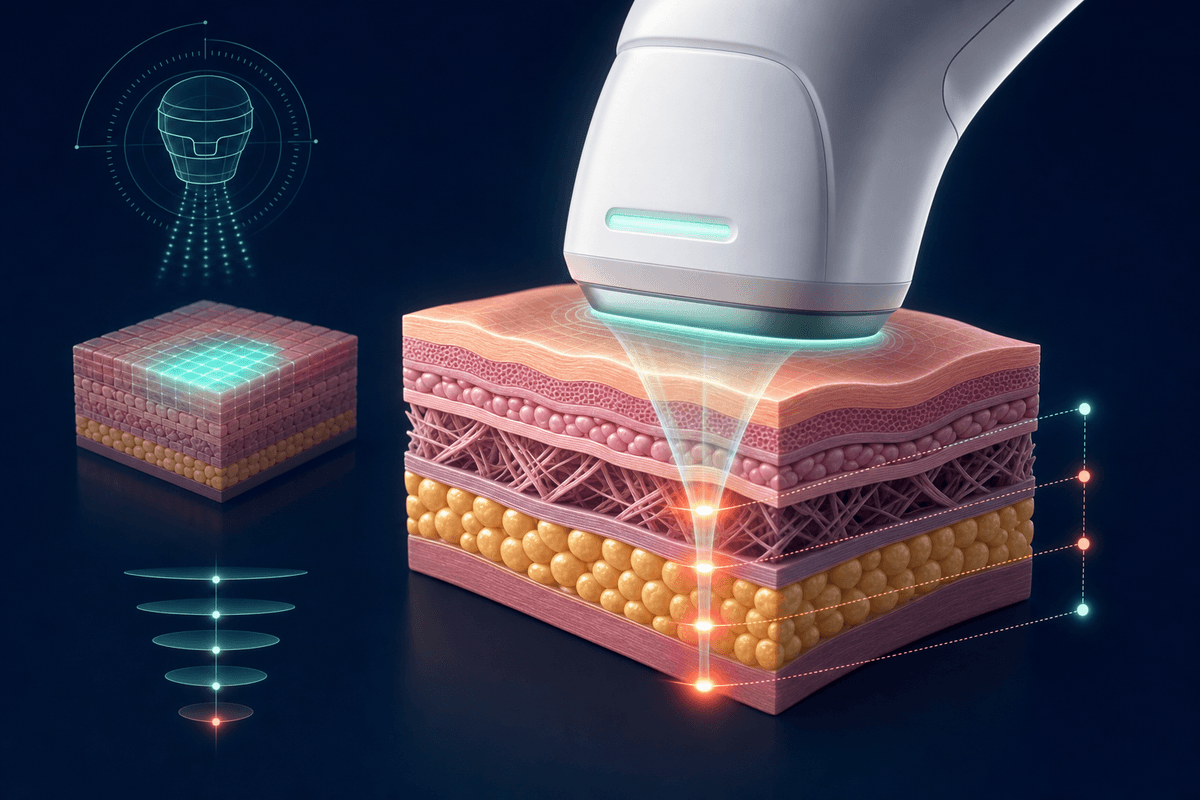
- What determined satisfaction 3 months later wasn't the number of shots, but this.
- Lifting effects peak after 2-3 months, but perceived differences vary by 30-70% depending on skin thickness, age, and lifestyle habits.
- How to set realistic expectations to bridge the gap between clinic advertisements and actual results.
Information as of July 2026
Lifting Effects vs. Individual Differences
- Perceived effectiveness varies by individual: 30-70%
- Satisfaction benchmark at 3 months post-procedure
- Average consideration for retreatment: 6 months
Faces at '3 Months Later' Met in the Consultation Room
Last week, a patient who came for a follow-up consultation looked in the mirror and said, "Doctor, my jawline still hasn't lifted." On the same day, another patient who received the same procedure smiled and said, "All my friends noticed the difference." They both had the same Ultherapy treatment with 600 shots, the same energy output, and the same treatment areas, yet their satisfaction levels at 3 months were polar opposites.
Most people searching for the downsides of Ultherapy get stuck at this point. They wonder, "Did I get it done incorrectly?" or "Was the clinic not thorough?" But honestly, individual differences are the biggest variable with this procedure. Advertisements rarely mention this.
Three Real Reasons for Lack of Effectiveness
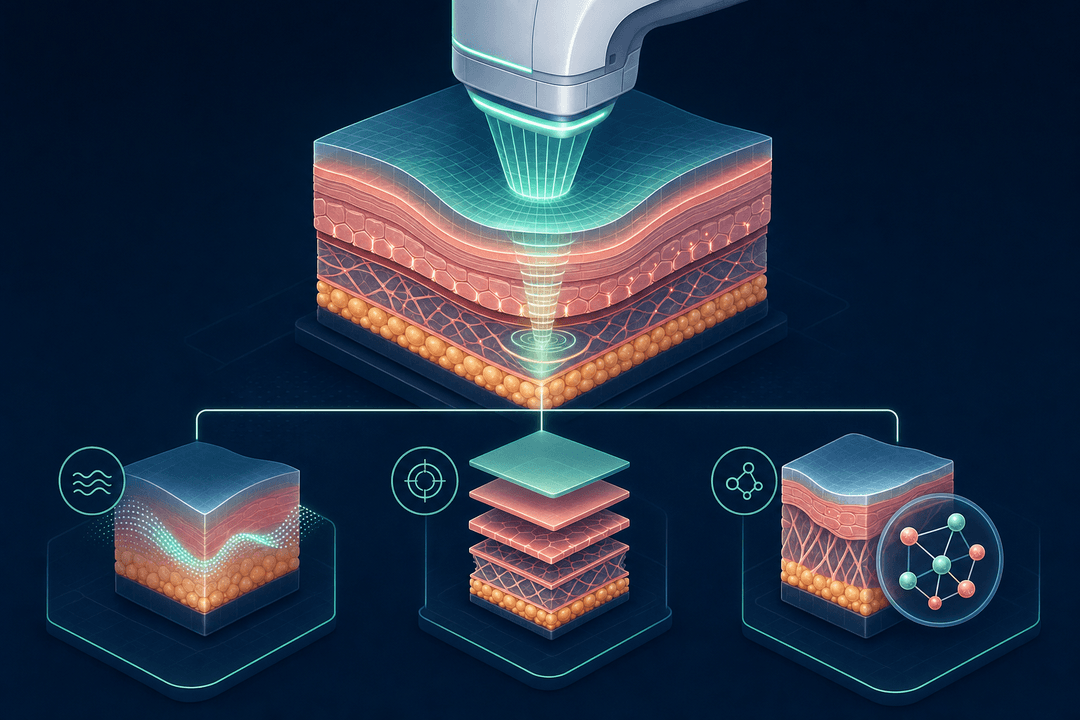
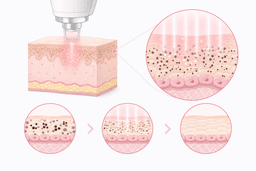
The first is skin thickness. Ultherapy works by delivering ultrasound energy deep into the dermis (3.0mm-4.5mm) to create thermal damage, stimulating collagen regeneration. If the skin is too thin, the energy may not reach the target layer effectively. This is often the case for individuals in their early to mid-twenties or those with a body fat percentage below 15%.
The second is age. According to FDA approval standards (Ultherapy 2009, targeting ages 30-60), lifting perception is highest for those over 40. The reason is simple: there's sagging to lift, making the results visible. While those in their twenties might see some maintenance effects for preventative purposes, dramatic changes are unlikely.
The third is lifestyle habits. A study (Korean Society for Dermatology, 2021) shows that if you don't use sunscreen, smoke, and sleep only 4-5 hours for three months post-procedure, the collagen synthesis rate can drop by 40-50% compared to normal. Clinics cannot manage these factors for you.
Caution Skin thickness can be measured with ultrasound. Most clinics will tell you if your skin is suitable for Ultherapy during the pre-procedure consultation. If your skin thickness is 1.5mm or less, you may experience reduced perceived effectiveness.
- Skin thickness 2.0mm or more: 70% perceived effectiveness
- Over 40s: Average lifting satisfaction 65%
- 20s for prevention: Dramatic changes unlikely
- Smokers: Collagen synthesis rate ↓ 40-50%
True or False Quiz
Ultherapy effects are better 2-3 months after the procedure than immediately after.
Check the answer
True Ultherapy is a procedure with delayed effects rather than immediate ones. While collagen temporarily contracts due to thermal stimulation right after the procedure, the actual lifting occurs over 2-3 months as new collagen fills in. If you judge the results after just one month and find them lacking, it's too soon.
Why 3 Months is the Turning Point
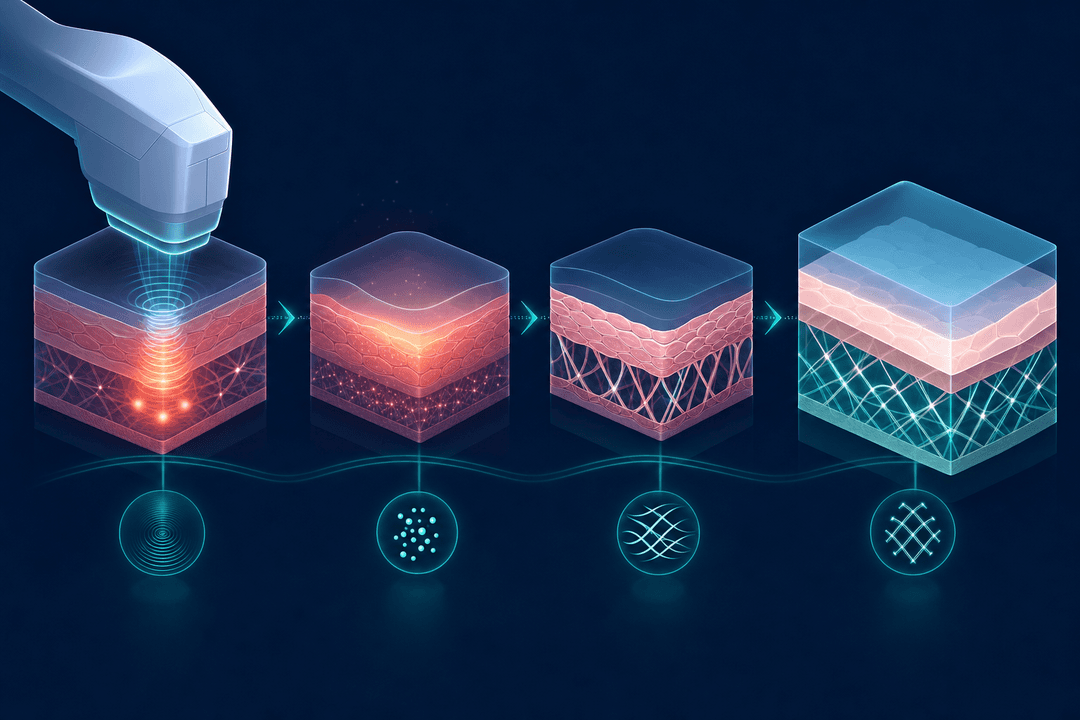
The key to Ultherapy lies in its delayed effects rather than immediate ones. While collagen fibers temporarily contract due to thermal stimulation immediately after the procedure, the actual lifting occurs as new collagen is generated over 2-3 months. Therefore, judging the results after just one month and finding them lacking is premature.
The issue arises after the 3-month mark. New collagen production begins to gradually decrease from around the 6-month point (Journal of Cosmetic Dermatology 2019). This is why if you're satisfied at the 3-month mark, the results are likely to be maintained, but if you're still unsure, it becomes the time to consider additional treatments.
Korea's Ministry of Food and Drug Safety's approval standards (Class III Medical Device, 2014) also specify 'effect duration of 6-12 months.' While some individuals may experience results for up to 18 months due to personal differences, most people consider retreatment within a year.
| Time Point | Physical Change | Perceived Effect | Consider Retreatment |
|---|---|---|---|
| Immediately Post-Procedure | Temporary contraction of collagen fibers | Mild immediate lifting | × |
| 1 Month Post-Procedure | Inflammatory response → Regeneration begins | No significant change | × |
| 2-3 Months Post-Procedure | Peak of new collagen production | **High level of lifting effect** | × |
| 6 Months Post-Procedure | Collagen synthesis rate decreases | Effect maintained or weakened | △ |
| 12 Months Post-Procedure | Returns to initial levels | Effect almost lost | ○ |
The duration of the effect may vary depending on individual skin condition, age, and aftercare.
Why Isn't Anyone Talking About This? The Shot Count Trap
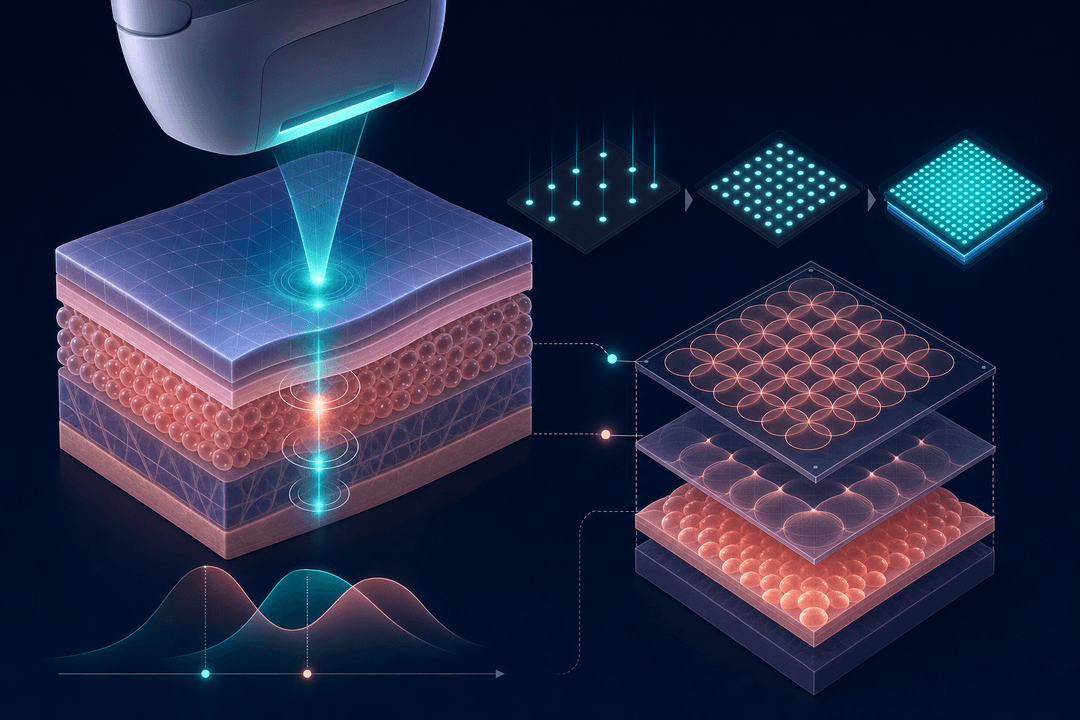
Advertisements often focus on a competition of numbers like '600 shots' or '900 shots.' However, energy density is more important than the shot count. Even with the same 600 shots, if the output (J/cm²) is low, the effectiveness can be halved. The recommended output for Ultherapy is 0.6-1.2J, but some clinics lower it to 0.4J to reduce patient complaints about pain.
The second trap is shot distribution. Spreading 600 shots evenly across the entire face may result in a less noticeable effect on the jawline compared to 400 shots concentrated on that area. The procedure should focus on the most concerning areas, but this is often not adequately addressed during consultations.
The third is the device difference. Ultherapy is actually a brand name for a medical device, while HIFU (High-Intensity Focused Ultrasound) is the general technology term. There are over 10 devices on the market, including Ultherapy (Merz), Doublo (Hironic), and Ultraformer MPT, and their output, focal depth, and area per shot all differ. Not all 'Ultherapy' devices are the same.
Key Takeaway Before the procedure, ask about 'which device is being used, how many lines are being shot, and what is the output.' Choosing based solely on shot count can lead to disappointment later with questions like 'Why isn't it working?'
- Recommended output: 0.6-1.2J (Ultherapy standard)
- Output 0.4J or less: Potential for less than 50% perceived effectiveness
- HIFU devices approved in Korea: Over 10 types
- Area per shot: Varies from 1.5-4.5mm² by device
Side Effects, Honestly
The most common side effect is temporary nerve damage. When treating the jawline or cheeks, there is a 2-5% chance of facial nerve paralysis symptoms (e.g., crooked mouth, numbness) (Korean Society of Plastic and Reconstructive Surgeons 2020). While most cases recover within 3-6 months, rare instances of permanent damage have been reported.
The second is burns. If the output is too high or the same area is treated repeatedly, thermal burns can occur deep in the dermis. These may not be visible on the surface but can appear as pigmentation or scarring after 2 weeks. Individuals with thin skin should be particularly cautious.
The third is fat loss. Stimulating the fat layer with high output can cause excessive thinning of the cheeks, leading to the undesirable effect of looking older. It's safer for those in their twenties or with a slender physique to avoid treatments at a 4.5mm depth.
What Remains After 3 Months of Ultherapy
The difference between those who saw results and those who didn't ultimately came down to expectations. Those who thought, "A 5mm lift of my jawline would be a success," were more satisfied than those expecting to "look 10 years younger." Ultherapy offers the maximum results achievable without surgery; it is not a substitute for surgery.
Furthermore, if you still see "no change" after 3 months, it's time to change direction. Simply increasing the shot count for retreatment may not be the solution. Combining it with thread lifts, fillers, or even considering surgery (facelift) might be more realistic options. This should be determined through cross-consultations with dermatologists and plastic surgeons.
- Realistic expectation: 5mm jawline lift, 10-15% improvement in elasticity
- No response even after 3 months: Potential for incompatibility
- Retreatment interval: Minimum 6 months recommended
- Consideration for alternatives: After 2 unsuccessful treatments
Ultherapy vs. Other Lifting Procedures Comparison
Ultherapy (HIFU) [Non-invasive · Immediate return to daily life]
- Effect onset: Peaks at 2-3 months
- Duration: 6-12 months
- Pain: Moderate (VAS 4-6)
- Cost: ₩400,000 - ₩1,000,000 (by area/shot count)
Significant individual variation and limited dramatic results. Suitable for prevention and maintenance.
Thread Lifting (PDO/Cog) [Mechanical pull · Immediate effect]
- Effect onset: Immediately post-procedure
- Duration: 12-18 months
- Pain: High (VAS 6-8)
- Cost: ₩1,000,000 - ₩3,000,000 (by number of threads)
More definitive lifting than Ultherapy. However, 5-10% risk of thread migration or protrusion.
Facelift Surgery [Semi-permanent · Dramatic improvement]
- Effect onset: 3 months post-procedure (after swelling subsides)
- Duration: 5-10 years
- Pain: Very high (general anesthesia)
- Cost: ₩5,000,000 - ₩15,000,000
Suitable for severe sagging in individuals over 50. Recovery takes 2-3 weeks.
Ultherapy Selection Guide Based on My Situation
Late 20s, for preventative purposes
Start with 3.0mm depth, 400 shots or less
Skin is thin and sagging is minimal, so high output/deep penetration may be excessive.
40s, with noticeable jawline sagging
4.5mm depth + 600 shots or more focused on the SMAS layer
Stimulating the fascia layer is necessary for perceived lifting. Shots should be concentrated on the jawline and cheeks for effectiveness.
Did not see results from previous treatments
Consider changing the device + increasing output, or combining with thread lifting
Repeating with the same device is likely to yield similar results. A change in approach may be more realistic.
High sensitivity to pain
Choose a clinic offering sedation anesthesia, or consider Oligio as an alternative
Oligio has 30-40% less pain than Ultherapy but similar effectiveness.
Common Misconceptions
Misconception More shots mean better results
Truth Output, area focus, and device type are more important than shot count. 400 shots concentrated on the jawline can be more effective than 600 shots spread across the entire face. Confirm 'where and how many lines are being shot' during your consultation.
Misconception One treatment lasts for a year
Truth While the MFDS approval standard is 6-12 months, actual results vary greatly by individual. Depending on skin thickness, age, and aftercare, some people return to their baseline in 3 months, while others maintain results for 18 months. Expecting 'at least 6 months' is more realistic.
Frequently Asked Questions
Are there people for whom Ultherapy doesn't work?
Yes. If your skin thickness is 1.5mm or less, you have very little sagging (e.g., early to mid-twenties), or you are very thin with a body fat percentage below 15%, perceived effectiveness can drop to below 30%. Have your skin thickness measured with ultrasound before the procedure to confirm suitability.
It's been 3 months and there's no change. Is it a failure?
If there's no response even at the peak of new collagen production at 3 months, there's a possibility of incompatibility. Considering alternatives like combining with thread lifting or fillers is more realistic than retreatment. Cross-consultation with a dermatologist and plastic surgeon is recommended.
How painful is it?
It's around a VAS score of 4-6 (out of 10). The pain is sharp near the bone (jawline, cheekbones) and less intense on the cheeks and forehead. If numbing cream alone isn't enough, choose a clinic that offers sedation anesthesia.
What is the most serious side effect to be cautious of?
It's temporary facial nerve damage (2-5% probability). After treatment on the jawline or cheeks, you might experience symptoms like a crooked mouth or numbness. Most cases recover within 3-6 months, but rare instances of permanent damage have been reported, making the selection of an experienced doctor crucial.
Can I go back to work immediately?
Yes. There might be slight swelling and redness immediately after the procedure, but it's usually manageable with makeup. However, avoid hot showers and saunas on the day of the procedure and be diligent with sun protection.
When is the best time for retreatment?
At least 6 months later. Retreating sooner can lead to excessive thermal stimulation, potentially causing collagen damage or fat loss side effects. If you were satisfied at 3 months, consider retreatment after a year; if unsatisfied, re-evaluate after 6 months.
Lumi's Take
Ultherapy is not a 'miracle procedure' but a realistic option. The reason some people see results and others don't ultimately comes down to whether they confirmed 'if their skin is suitable for this procedure' beforehand. To avoid disappointment when looking in the mirror after 3 months, be sure to ask about skin thickness, output, and device type during your consultation today. Lumi is rooting for you!
This content is for informational purposes only and does not substitute for medical advice. Always consult with a specialist before undergoing any procedure.