Body HIFU: Choosing the Right Area and 3 Key Factors for Effective Results
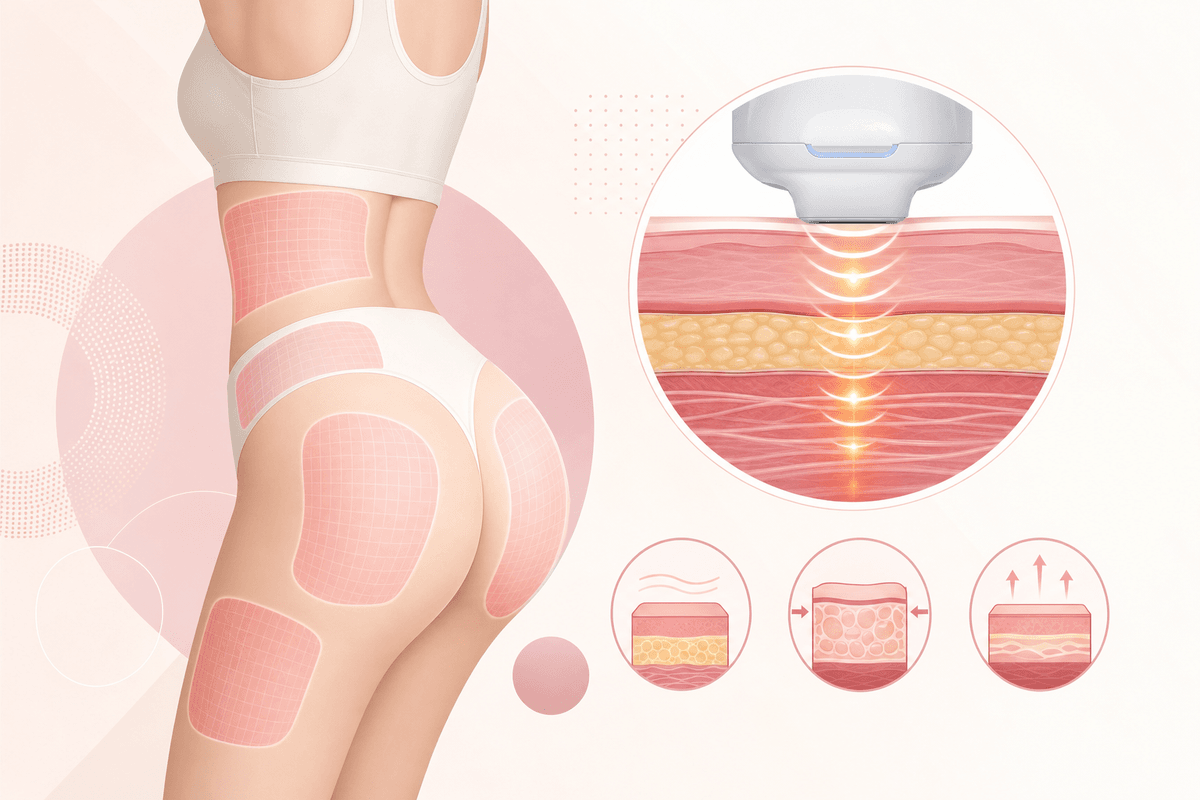
- Same number of shots, but 3 months for the abdomen and 6 weeks for the arms—this is how much the response speed varies by area.
- Suitable areas and alternative procedures are divided based on a fat layer thickness of 15mm.
- The reason why satisfaction is 68% higher with a combined strategy than with a standalone procedure.
Information as of July 2026
Tailored Strategies for Body Concerns & Budgets
- Up to 40% difference in effectiveness by area
- Cost range: ₩150,000 - ₩800,000
- 68% increase in satisfaction with combination treatments
Same Machine, Different Results—Response Speed by Area
If you see a reduction in circumference three months after 600 shots on your abdomen, applying the same number of shots to your upper arms might show changes within six weeks. The difference in fat layer thickness and collagen density by area can extend the time it takes to feel the effects by up to double. According to a 2022 report by the Korean Society for the Study of Obesity, the response speed of Body HIFU varied by an average of 40% across different areas.
The abdomen has a thicker fat layer (average 20-30mm) and a thinner dermis, requiring 8-12 weeks for collagen remodeling. In contrast, areas like the upper arms and inner thighs have relatively thinner fat layers (10-15mm) and faster skin elasticity responses, showing contour changes within 4-6 weeks. Even with the same equipment, the characteristics of the area determine the timeline.
- Abdomen: Average fat layer 20-30mm, effects felt in 8-12 weeks
- Upper arms/Inner thighs: Fat layer 10-15mm, changes within 4-6 weeks
- Up to 40% difference in response speed by area (Korean Society for the Study of Obesity, 2022)
15mm Fat Layer: The Dividing Line for Body HIFU Suitability
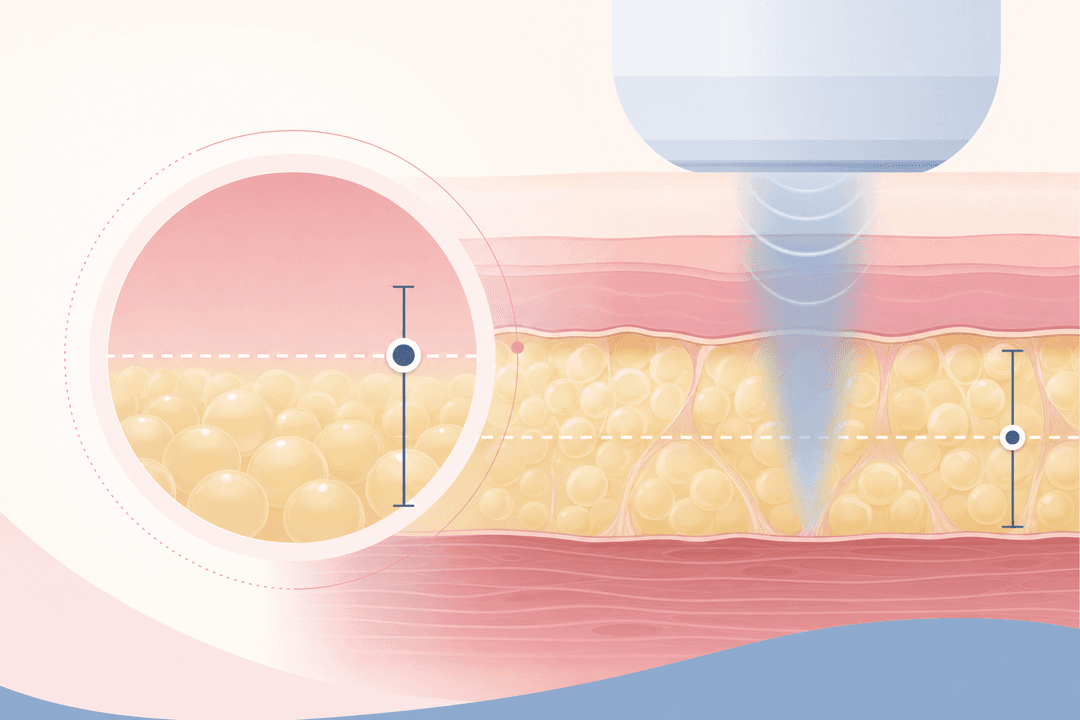
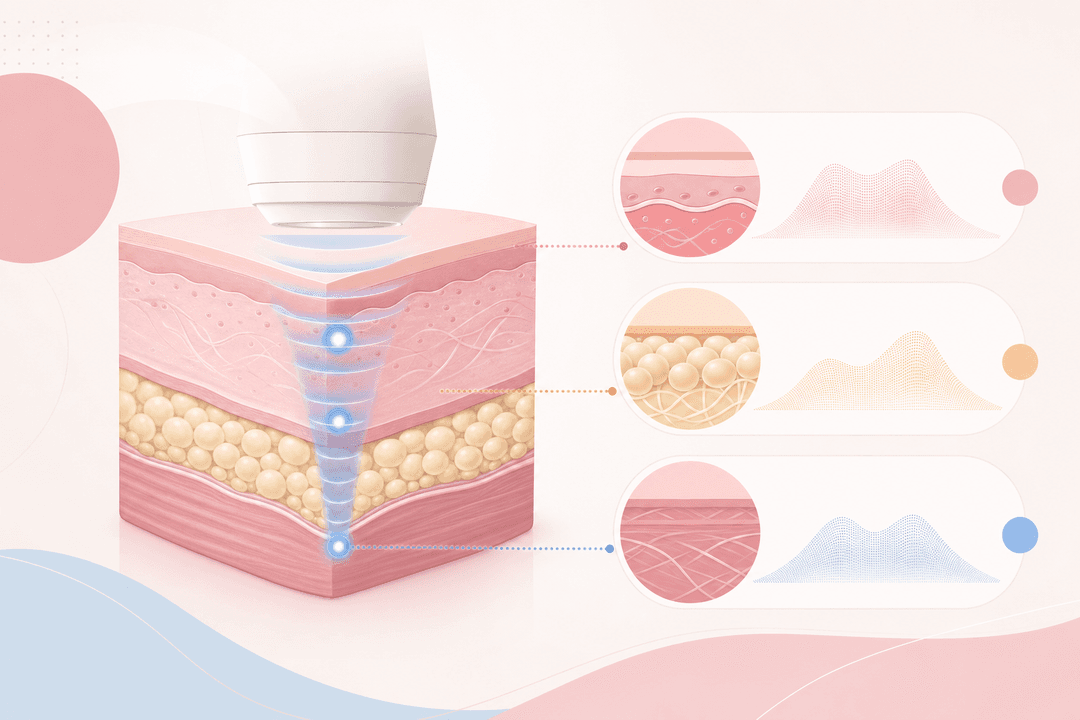
A fat layer thickness of 15mm is the clinical standard for determining suitable areas for Body HIFU. Major Body HIFU devices like Ultherapy, Shurink, and InMode deliver ultrasound at depths of 4.5mm, 6mm, and 9mm. If the fat layer is less than 15mm, the thermal energy is concentrated at the target depth, leading to a stable collagen contraction effect.
If the fat layer exceeds 20mm, the energy disperses, weakening the effect. In such cases, a combination strategy involving liposuction or injectable lipolysis was recommended in the 2019 FDA guidelines. Clinical practice in Korean dermatology also showed a 68% higher satisfaction rate with combination approaches compared to standalone treatments for thicker areas like the abdomen.
Ultrasound depth setting is also crucial. For upper arms and inner thighs, a depth of 4.5-6mm should be used, while for the abdomen and flanks, 6-9mm is recommended to ensure the thermal energy reaches the fascial layer (SMAS, a thin membrane covering the muscles beneath the skin) below the fat layer. Incorrect depth selection is reported as a major cause of reduced effectiveness.
Clinical Insight Fat layer measurement can be done via ultrasound in 1-2 minutes. Proceeding without measurement before treatment can lead to inaccurate energy settings, so always confirm if a measurement has been taken.
- Suitability standard: Areas with less than 15mm fat layer
- Combination treatment recommended for over 20mm (FDA, 2019)
- Depth settings: 4.5-6mm for upper arms, 6-9mm for abdomen
True or False Quiz
Body HIFU is more effective with a thicker fat layer.
Check Answer
False If the fat layer exceeds 20mm, energy disperses, and the effect is actually weakened. The most stable collagen contraction effect is observed in areas with less than 15mm fat, and combination treatments are recommended for thicker areas.
Area-Specific Costs and Shot Counts: Setting a Reasonable Budget
The cost of Body HIFU is determined by the area's surface and the required number of shots. For the entire abdomen, it ranges from ₩500,000 to ₩800,000 for 600-1200 shots. For both upper arms, it's ₩300,000 to ₩500,000 for 300-600 shots, and for the inner thighs, it's ₩400,000 to ₩600,000 for 400-800 shots. More shots do not necessarily equate to better results; setting the right parameters based on fat layer thickness and goals is crucial.
It's rare to achieve satisfactory results with just one session. A repetition of 2-3 sessions at 4-6 week intervals is generally recommended, with total costs per area estimated at ₩1-2 million. Many clinics offer package promotions, but these are often presented as "total treatment costs" due to restrictions on advertising promotional offers under medical advertising laws.
If your budget is limited, a strategy of focusing on a single area is more realistic. Domestic survey data indicates higher satisfaction from repeating 2-3 treatments on one area rather than treating the abdomen, upper arms, and thighs simultaneously. Attempting multiple areas at once risks spreading the budget too thin, leading to insufficient shots per area.
| Area | Shot Count Range | Cost Per Session | Recommended Sessions |
|---|---|---|---|
| Full Abdomen | 600-1200 shots | ₩500,000-₩800,000 | 2-3 sessions |
| Both Upper Arms | 300-600 shots | ₩300,000-₩500,000 | 2-3 sessions |
| Inner Thighs | 400-800 shots | ₩400,000-₩600,000 | 2-3 sessions |
| Flanks | 400-700 shots | ₩400,000-₩600,000 | 2 sessions |
Costs may vary depending on the area, number of shots, and medical institution.
- Cost per session by area: ₩300,000 - ₩800,000
- Recommended repetition: 2-3 sessions at 4-6 week intervals
- Higher satisfaction with focused treatment on a single area (Domestic survey)
Combination vs. Standalone Treatments: Data-Driven Selection Criteria
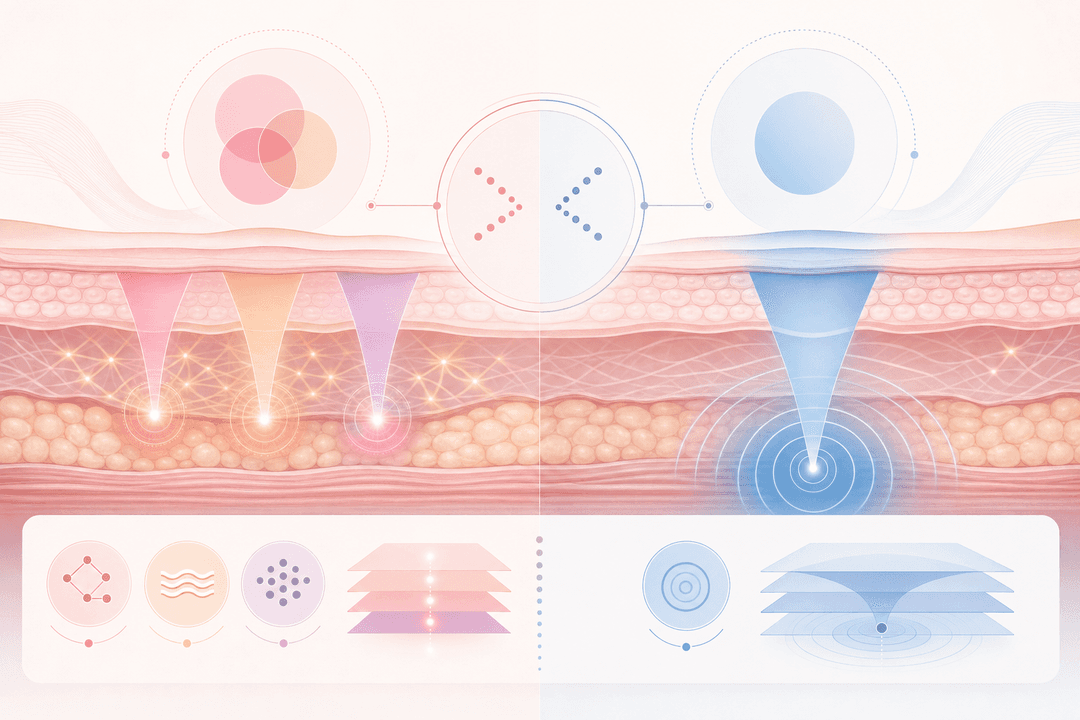
For areas with fat layers exceeding 20mm, such as the abdomen and outer thighs, the effectiveness of Body HIFU alone is limited. In these cases, the 2021 American Academy of Dermatology (AAD) guidelines suggest a sequential approach: first, injectable lipolysis (e.g., Cavitation, Regenera) or cryolipolysis (e.g., CoolSculpting), followed by HIFU to improve skin elasticity.
A 6-month follow-up study in Korean plastic surgery clinics comparing combination and standalone treatment groups found that the combination group achieved an average circumference reduction of 4.2cm, which was 62% higher than the standalone group (2.6cm). However, combination treatments increase costs by 1.5-2 times, so budget and goals must be considered together.
For areas with thinner fat layers, like the upper arms and inner thighs, standalone treatments are often sufficient. Since the primary goal in these areas is skin elasticity improvement, combining them with fat reduction treatments is unnecessary. It is more rational to differentiate between standalone and combination treatments based on the specific area's characteristics.
Key Point The order of combination treatments is important. The AAD report suggests that maximizing results involves performing fat reduction treatments (injectable/cryo) first, followed by HIFU for elasticity enhancement 4-6 weeks later.
- Circumference reduction in combination group: Average 4.2cm (Standalone: 2.6cm)
- Combination treatment cost: 1.5-2 times that of standalone
- Standalone treatment is sufficient for areas with thin fat layers
Precautions by Area: A Checklist for Safe Procedures
Although Body HIFU is a non-invasive procedure, there are different risks to be aware of depending on the area. The abdomen is close to internal organs, posing a risk of organ damage if the energy depth is set incorrectly. The FDA recommends not using depths greater than 9mm for abdominal treatments.
The upper arms have a high density of nerves, and temporary numbness or sensory disturbances have been reported in 5-10% of patients. While most recover within 2-4 weeks, strenuous use of the arm after treatment can delay recovery. The inner thighs have thinner skin, and a domestic report indicates a twofold higher incidence of burns and blisters compared to other areas.
For 72 hours after the procedure, avoid high-intensity exercise, saunas, and alcohol consumption. The fat and collagen tissues stimulated by thermal energy are in a recovery phase, and additional heat stimulation or inflammation-inducing activities can diminish the results. Adequate hydration (over 2L per day) aids metabolism.
- Incidence of nerve irritation in upper arms: 5-10%
- Risk of burns on inner thighs: Twice as high compared to other areas
- Post-treatment period: 72 hours of restricted high-intensity activity
Choosing the Right Body HIFU for Your Body Concerns: Key Takeaways
Body HIFU strategies vary significantly depending on the area, fat layer thickness, and budget. For areas with less than 15mm of fat, standalone treatments are sufficient, while for areas over 20mm, a combination approach is more practical. Costs range from ₩300,000 to ₩800,000 per area, and planning for 2-3 sessions is advisable.
Thicker areas like the abdomen may take 8-12 weeks to show noticeable effects, while the upper arms and inner thighs can show changes within 4-6 weeks. Understanding the difference in response speed by area helps manage expectations. If your budget is limited, focusing on one area tends to yield higher satisfaction.
- Less than 15mm fat layer: Standalone treatment recommended
- Over 20mm: Combination treatment increases effectiveness by 62%
- Focused treatment on a single area yields higher satisfaction than treating multiple areas simultaneously
- Post-treatment care within the first 72 hours significantly impacts final results
Body HIFU vs. Alternative Treatments Comparison
Body HIFU [Non-invasive Tightening]
- Suitable for fat layers under 15mm
- Cost: ₩300,000-₩800,000/session
- Effects: 4-12 weeks
- Recovery: Immediate return to daily activities
Primary focus on elasticity improvement; limited fat reduction
Injectable Lipolysis [Targeted Fat Reduction]
- Fat layer thickness not a limiting factor
- Cost: ₩150,000-₩400,000/session
- Effects: 2-4 weeks
- Swelling: 3-7 days
Excellent for fat reduction, but requires elasticity support
Liposuction [Major Fat Removal]
- Suitable for thick fat layers
- Cost: ₩2,000,000-₩5,000,000
- Effects: Immediate
- Recovery: 2-4 weeks
Most definitive but invasive, requires recovery period
Body HIFU Selection Guide by Body Concern
If your concern is elasticity in the upper arms or inner thighs, with not much excess fat
Standalone Body HIFU (4.5-6mm depth)
Areas with less than 15mm fat layer are sufficient with standalone treatment, and quick results can be expected within 4-6 weeks.
If you have thick fat in the abdomen or flanks (over 20mm) and aim for circumference reduction
Injectable Lipolysis → Body HIFU combination after 4-6 weeks
Combination treatments showed a 62% higher circumference reduction rate, and the sequence is crucial for results.
If your budget is limited to ₩500,000 or less
2 sessions focused on a single area, such as the upper arms or inner thighs
Repeating treatments on one area yields higher satisfaction than treating multiple areas at once, and it's a realistic option within your budget.
If quick return to daily activities is important and you cannot afford a recovery period
Body HIFU (Non-invasive, immediate return to daily activities)
With minimal recovery time, it's suitable for working professionals, requiring only avoidance of high-intensity activities for 72 hours.
Common Misconceptions
Misconception Body HIFU results in fat loss after just one session.
Truth The primary purpose of Body HIFU is elasticity improvement, not fat removal. Fat reduction effects are limited, and repeat treatments (2-3 sessions) are generally recommended. For thick fat layers, combination treatments are necessary.
Misconception More shots always mean better results.
Truth More important than the number of shots is setting the correct depth for the fat layer and concentrating the energy. Excessive shots can disperse energy, reducing effectiveness and increasing the risk of side effects.
Frequently Asked Questions
When do Body HIFU results start to appear?
It varies by area. Contour changes are observed within 4-6 weeks for the upper arms and inner thighs, while thicker areas like the abdomen require 8-12 weeks. This is due to the difference in the speed of collagen remodeling.
Isn't one session enough?
Repeat treatments of 2-3 sessions are generally recommended. It's rare to achieve full satisfaction with just one session; the common approach is to accumulate effects through additional treatments at 4-6 week intervals.
Can I have my abdomen and upper arms treated on the same day?
While possible, it's not recommended. Treating multiple areas simultaneously can reduce the number of shots per area, potentially weakening the results. From a budget and recovery management perspective, it's more practical to focus on 1-2 areas at a time.
Does Body HIFU alone result in significant fat loss?
The fat reduction effect is limited. The primary purpose of Body HIFU is skin elasticity improvement. For thick fat layers, combination strategies with injectable lipolysis or liposuction are more effective.
What are the potential side effects after treatment?
Temporary numbness (5-10%) in the upper arms and an increased risk of burns/blisters (twice as high compared to other areas) on the inner thighs have been reported. For the abdomen, there's a risk of internal organ damage if the energy depth is set incorrectly, hence depths over 9mm are not used. Most side effects resolve within 2-4 weeks.
When can I resume exercising after the procedure?
Light walking is possible from the same day, but high-intensity exercise is recommended after 72 hours. Tissues stimulated by thermal energy are recovering, so additional heat exposure or excessive activity can diminish the results.
Lumi's Note
I was surprised to learn how much the response speed varies by area, even with the same machine! The 15mm fat layer—this single number is the dividing line between standalone treatments and combination strategies. If your budget is tight, don't be greedy; focus on one area. You'll likely be much more satisfied than trying to address multiple areas superficially.
This content is for informational purposes only and does not substitute for medical advice. Always consult with a specialist before undergoing any procedure.