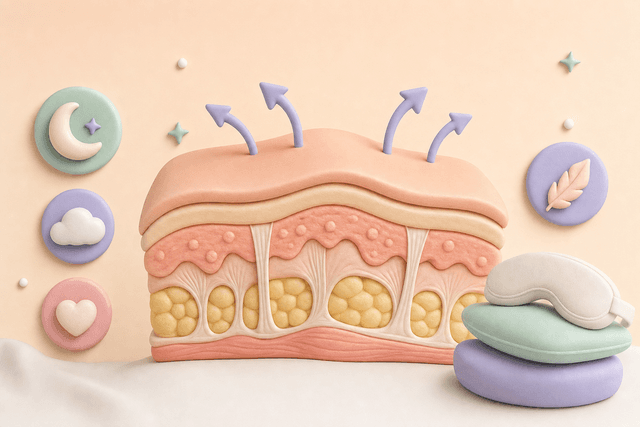
Differences for those who started exercising in the 3rd week of breast augmentation recovery

- Why does recovery take twice as long for those who start exercising in week 3?
- What determines recovery speed is the management of the first 72 hours and implant placement.
- While returning to daily life is quick, at least 3 months are needed for the final results.
- Average return to daily activities: 7-10 days
- Intense exercise allowed: 6 weeks
- Final shape completion: 3-6 months
Everyone Says 2 Weeks Is Fine, But the Real Difference is Elsewhere
When you search for breast augmentation recovery time, the phrase "daily life is possible in 2 weeks" appears most often. However, in reality, the final results differ significantly between those who start exercising in week 3 and those who wait until week 6. What separates recovery is how quickly the implant settles. If placed under the muscle (submuscular), limiting movement for the first 2 weeks is crucial. If placed over the muscle (subglandular), recovery is relatively faster, but strenuous movements are still off-limits until after 6 weeks (Korean Society of Plastic and Reconstructive Surgeons, 2023).The First 72 Hours: This is Where Recovery Speed is Determined
Swelling peaks in the first 48 hours after surgery. Sleeping with your upper body elevated at a 45-degree angle and repeating cold compresses every 15 minutes can speed up recovery by a full day. Conversely, actions like bending your head forward or raising your arms above your head can prolong swelling for over 3 days. Showering is possible after 48 hours, but only without directly rubbing the wound area. Since the implant's position is not fully stabilized, pressure or impact can affect the shape.Caution Movements to avoid for the first 3 days: lying on your side, carrying heavy bags (over 3kg), reaching for objects. The implant may shift to one side.
OX Quiz
Returning to office work after breast augmentation is usually possible in 2-3 days.
Check the answer
X It's actually recommended from 7-10 days later. Swelling is severe for the first 3 days, and arm movements are restricted, making even office tasks uncomfortable.
Return to Daily Life is Quick, But Exercise Timing is Different
| Period | Allowed Activities | Precautions |
|---|---|---|
| 1-3 days | Indoor walking, light shower (after 48 hours) | Maintaining upper body at a 45-degree angle is essential |
| 7-10 days | Office work, driving | Avoid stretching arms out and carrying heavy bags |
| 2-4 weeks | Light lower body exercises (squats) | Upper body strength training still prohibited |
| After 6 weeks | Intense upper body workouts, swimming | Start with 50% of usual weight |
Recovery speed may vary depending on implant placement (subglandular/submuscular) and individual constitution.
Key Checklist for Faster Recovery
Recovery is ultimately a combination of managing the first 2 weeks and patience for up to 6 weeks. Disinfecting the wound twice daily after showering and wearing a compression band for 4 weeks will noticeably speed up swelling reduction. Honestly, I've seen many who started exercising at 3 weeks thinking "this should be fine," only to end up with one side drooping more or developing asymmetrical shapes. The final results are evaluated after 6 months.- Wearing a compression band for 4 weeks shortens swelling recovery by 30%
- Upper body exercise before 6 weeks doubles the risk of implant displacement
Recovery Strategies by Situation
If you had submuscular surgery
Absolutely no arm movements above shoulder level for the first 2 weeks; consider returning to work after 10 days.
If you need to return to office work quickly
Opt for subglandular placement, but still secure a work-from-home environment for 7 days.
Misconceptions
Myth You can do any exercise after just 2 weeks.
Truth Upper body strength training is allowed after 6 weeks; before then, implant position can shift. Lower body exercises (squats, leg presses) are possible after 2 weeks.
Actions Strictly Prohibited During Recovery
- Arm movements above the head for the first 2 weeks (e.g., changing clothes, reaching for items on shelves) — direct cause of implant displacement
- Upper body strength training before 6 weeks (push-ups, bench presses, pull-ups) — pressure before tissue adhesion carries a risk of asymmetry
- Removing the compression band arbitrarily — it must be worn for at least 4 weeks for swelling management and shape stabilization
Frequently Asked Questions
When can I shower?
Showering is possible after 48 hours, but do so by lightly letting water run over the area, without directly rubbing the wound.
Is it okay to start Pilates in week 3?
Movements involving significant upper body motion (planks, modified push-ups) are allowed after 6 weeks. Breathing-focused stretching is possible after 2 weeks.
What are the potential side effects during recovery?
Capsular contracture (hardening of tissue around the implant) is the most common and can be prevented with proper management (compression, massage) for the first 6 months. Asymmetry is primarily caused by strenuous movements before the implant is stable.
References
- Recovery Guidelines by Implant Placement Location for Breast Augmentation — Korean Society of Plastic and Reconstructive Surgeons, 2023
- Recommendations for Post-Medical Device Recovery Management — Ministry of Food and Drug Safety, 2024
Lumi's Word
Recovery isn't a 'time to endure,' but a 'time to invest.' If you rest properly for the first 2 weeks, you'll look in the mirror 6 months later and be glad you endured. Don't be impatient; your body will complete the process on its own.
This content is for informational purposes only and does not substitute for medical advice. Always consult with a specialist before undergoing any procedure.