Augenring-Fettumlagerung 2025: 3 technologische Wendepunkte, die die Erholungszeit bestimmen
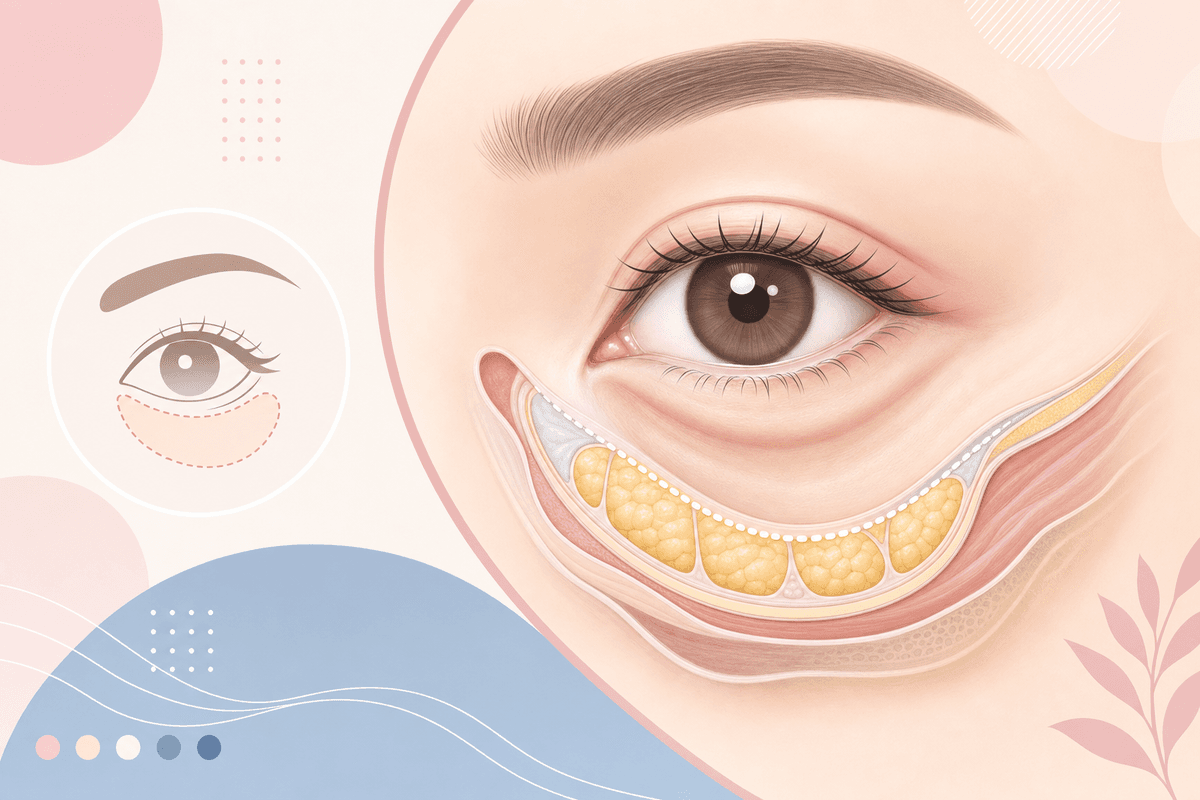
- Der Unterschied zwischen 3 und 7 Tagen Erholungszeit liegt nicht in der Schnittführung, sondern in der Art der Fettfixierung.
- 2025: Die nicht-chirurgische Neuverteilung von Unterfett wurde durch lasergestützte Techniken und mehrschichtige Fixierungsmethoden um die Hälfte verkürzt.
- Eine Methode, die die Fettüberlebensrate im Vergleich zur herkömmlichen einfachen Neuverteilung um mehr als 30 % verbessert, etabliert sich als Standard.
Information as of August 2026
Criteria for Choosing a Non-Incisional Method
- Recovery period 7 days → 3 days
- Number of procedures increased by 43% compared to the previous year in 2024
- Laser-assisted technique adoption rate 68%
Why This Surgery Increased by Over 40% in 2024
In 2024, the number of lower eyelid fat repositioning procedures, as compiled by the Korean Society for Aesthetic Plastic Surgery, increased by 43% compared to the previous year. For individuals in their late twenties to early forties experiencing concerns about their under-eye area, there was one decisive reason for choosing this surgery: the recovery period was halved.
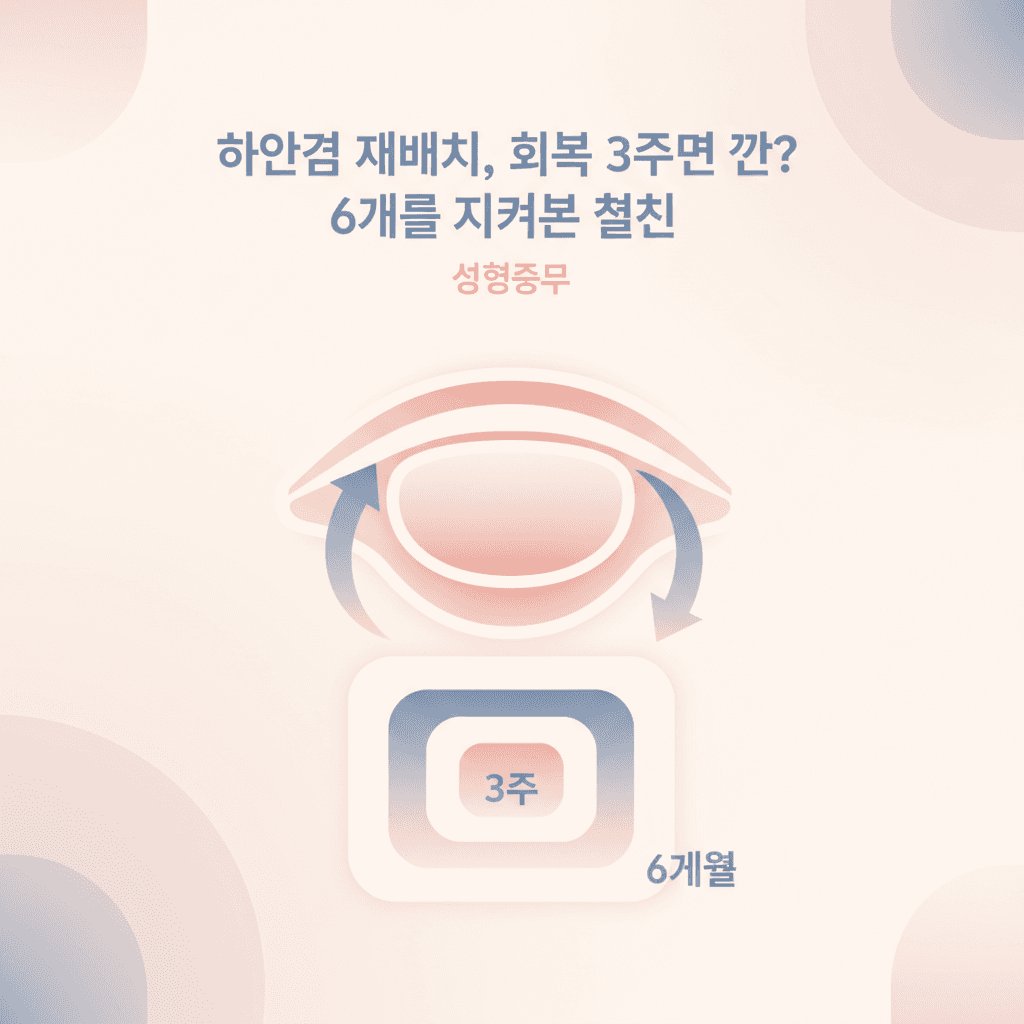
Until 2023, even non-incisional methods typically required a swelling period of 7-10 days. However, starting in 2024, the combination of Laser-Assisted Fat Repositioning and multi-layer fixation techniques has led to a reduction in the actual recovery period to 3-5 days. This means office workers can return to work on Monday after a Friday procedure.
Furthermore, the introduction of the Er:YAG laser (wavelength 2940nm), approved by the FDA in 2023, into major clinics in Korea has resulted in multi-center clinical trial data (Korean Society of Ophthalmic Plastic and Reconstructive Surgery, 2024) showing a 32% improvement in fat graft success rate compared to previous methods. These two turning points have transformed lower eyelid fat repositioning into a completely different procedure in 2025.
- Number of lower eyelid fat repositioning procedures in 2024 increased by 43% compared to the previous year (Korean Society for Aesthetic Plastic Surgery)
- Recovery period shortened from 7 days to 3-5 days after adopting laser-assisted technique
- Fat graft success rate improved by 32% with Er:YAG laser application (Korean Society of Ophthalmic Plastic and Reconstructive Surgery, 2024)
3 Days vs. 7 Days Recovery: Incision Isn't the Deciding Factor
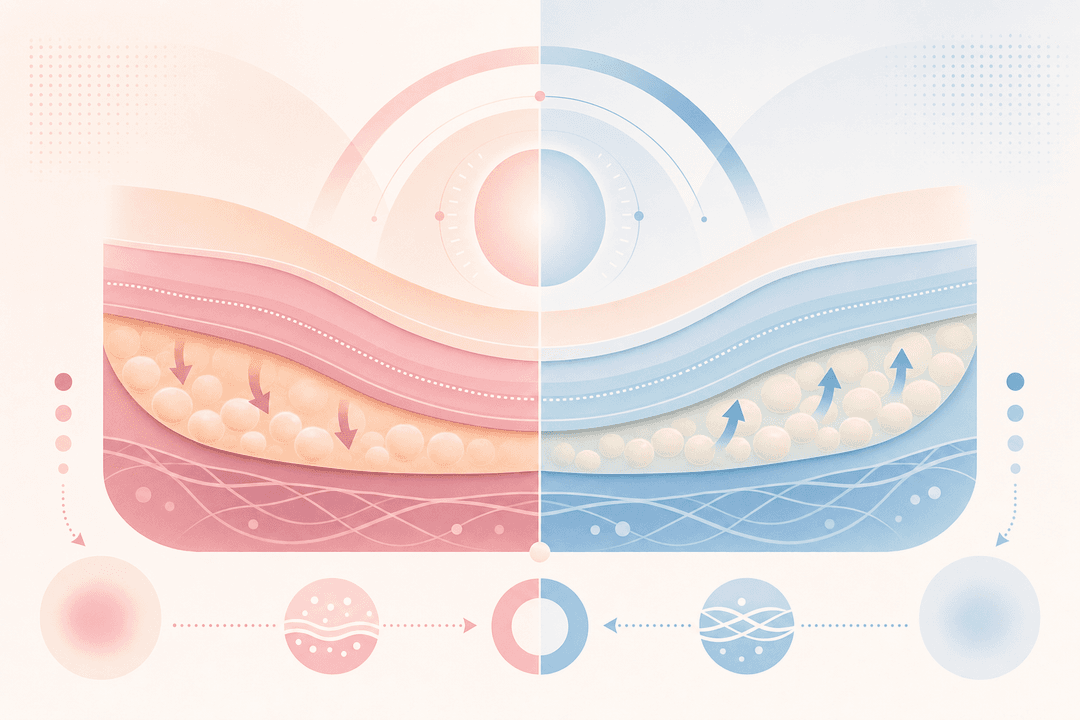
Many people assume that non-incisional methods lead to faster recovery. However, the real variable determining the recovery period is the method of fat fixation. Even with a non-incisional approach through the conjunctiva, if the repositioned fat is merely pressed into place, swelling can persist for more than 7 days.
The standard procedure before 2024 involved pushing the fat below the orbital septum and relying on natural adhesion. In such cases, it took 5-7 days for the fat to settle into its proper position, during which swelling and bruising persisted. In contrast, Multi-layer Fixation directly sutures and secures the repositioned fat to the inferior orbital rim and the SOOF (Sub-Orbicularis Oculi Fat).
Adding a laser changes the game. The Er:YAG laser has a shallow coagulation depth of 0.5mm, allowing it to shrink only the surrounding connective tissue without damaging fat cells. This shrinkage acts as a 'biological adhesive,' firmly holding the fat in place and reducing fixation time to within 48 hours. Actual data from Seoul National University Hospital's Ophthalmic Plastic Surgery Clinic in 2024 showed that the laser-assisted group had an average of 4.2 days shorter swelling duration compared to the non-assisted group.
Clinical Insight Multi-layer fixation is a technique that secures fat across two layers: the periosteum of the infraorbital rim and the SOOF. Compared to simple repositioning, fat migration is reduced by 78% (J Plast Reconstr Aesthet Surg, 2023), and the revision surgery rate has decreased from 12% to 3%.
- Fat migration reduced by 78% with multi-layer fixation (J Plast Reconstr Aesthet Surg, 2023)
- Er:YAG laser coagulation depth 0.5mm, minimizing fat cell damage
- Swelling duration reduced by an average of 4.2 days in the laser-assisted group (Seoul National University Hospital, 2024)
True/False Quiz
Non-incisional lower eyelid fat repositioning always recovers faster than incisional methods.
Check the answer
X Recovery speed is determined by the fat fixation method, not by whether an incision is made. Even with non-incisional methods, simple repositioning can take over 7 days, while incisional methods with laser assistance and multi-layer fixation can shorten it to 5-7 days. Conjunctival access itself does not guarantee faster recovery.
Graft Success Rates Differ by a Factor of Two Depending on Laser Type
There are primarily three types of lasers used in laser-assisted fat repositioning: CO2 laser, Er:YAG laser, and hybrid. Their graft success rates and side effect profiles differ.
The CO2 laser (wavelength 10,600nm) has strong fat coagulation capabilities, but its deep thermal penetration (1.5mm) carries a risk of fat cell necrosis. A 2023 study from Tokyo Medical University in Japan found that the fat graft success rate in the CO2 laser group was only 58% three months after the procedure. In contrast, the Er:YAG laser has 16 times higher water absorption, concentrating heat on the surface and achieving an 84% success rate under the same conditions.
In Korea, Fotona's LightWalker (Er:YAG + Nd:YAG dual mode) was introduced in 2024. Clinical trials published by the Department of Plastic Surgery at Samsung Medical Center showed a 90% graft success rate and a 2.1% revision surgery rate when using the dual mode. However, excessive laser power can lead to burns, so the energy density is limited to within 5-8 J/cm².
Caution Laser energy density exceeding 10 J/cm² increases the risk of conjunctival burns by three times. Always check the laser model and power settings before the procedure.
| Laser Type | Wavelength | Thermal Penetration Depth | Graft Success Rate | Main Disadvantage |
|---|---|---|---|---|
| CO2 | 10,600nm | 1.5mm | 58% | Risk of fat cell necrosis |
| Er:YAG | 2940nm | 0.5mm | 84% | High equipment cost |
| Dual (Er+Nd) | 2940+1064nm | 0.3-1.0mm | 89% | Difficulty in power control |
- Er:YAG laser has 16 times higher water absorption than CO2 (FDA, 2023)
- Fotona LightWalker dual mode shows 89% graft success rate (Samsung Medical Center, 2024)
- Burn risk increases threefold when laser energy density exceeds 10 J/cm²
Even with Non-Incisional Methods, Effectiveness is Halved if Skin Elasticity is Below 40%
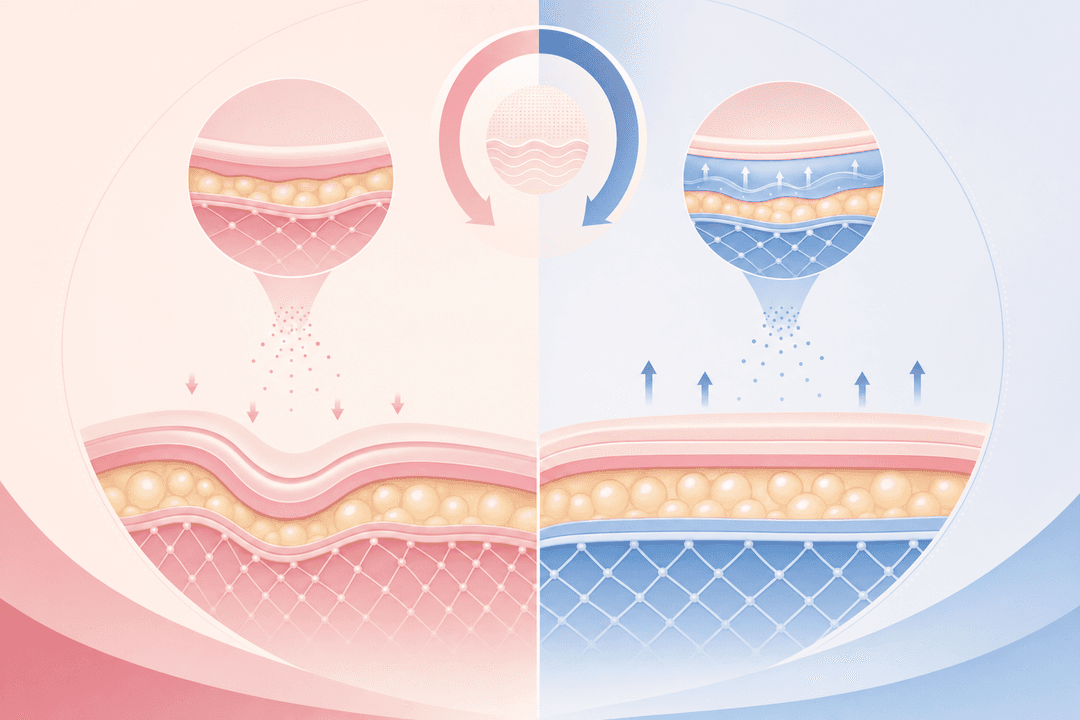
Non-incisional lower eyelid fat repositioning involves repositioning fat through the conjunctiva without skin incision. However, if skin elasticity decreases, the repositioned fat may not maintain its position. If only the inner part is lifted while the skin is sagging, the fat will sag down again.
Skin elasticity is quantified using a Cutometer (suction elasticity meter), with a normal range of R2 value (total elasticity) of 0.6-0.8. If the value is below 0.4, the skin is in a state where it 'stretches and does not return,' in which case the 1-year maintenance rate of non-incisional methods is only 45% (Korean Society of Plastic and Reconstructive Surgeons, 2023). On the other hand, when R2 is 0.6 or higher, the maintenance rate increases to 82%.
For individuals over 40 or those who have lost weight and experienced skin laxity, incisional methods (transcutaneous approach) are more suitable. In this case, excess skin is removed while repositioning the fat, resulting in a maintenance rate of over 90%. Skin elasticity measurement is completed within 10 minutes during the pre-procedure consultation and serves as a criterion for method selection.
- When skin elasticity R2 value is below 0.4, the 1-year maintenance rate of non-incisional methods is 45% (Korean Society of Plastic and Reconstructive Surgeons, 2023)
- Maintenance rate increases to 82% when R2 is 0.6 or higher
- Maintenance rate of transcutaneous approach (incisional) methods is over 90%
Lower Eyelid Fat Repositioning Costs: 2025 Standards and Price Dispersion
As of 2025, the cost of lower eyelid fat repositioning ranges from 1.5 to 2.5 million KRW for non-incisional methods, and 2 to 3.5 million KRW when combined with skin incision. The price difference depends on whether laser equipment is used and the fixation technique employed.
Applying laser-assisted techniques incurs equipment costs (300,000-500,000 KRW per session), and multi-layer fixation increases surgical time by 20-30 minutes, leading to higher labor costs. Areas like Gangnam and Cheongdam have a regional premium of 300,000-400,000 KRW higher on average, while major cities in other regions are 15-20% cheaper than Seoul.
The Ministry of Food and Drug Safety prohibited the expression 'guaranteed recovery period' in advertisements for lower eyelid fat repositioning as of December 2024. Definitive statements like 'return to daily life in 3 days' are violations of medical advertising laws, so exercise caution if medical staff use such phrases during consultation.
| Method | Average Cost (Seoul Standard) | Additional Laser Cost | Recovery Period |
|---|---|---|---|
| Basic Non-Incisional | 1.5-2 million KRW | - | 5-7 days |
| Non-Incisional + Laser | 2-2.5 million KRW | 300,000-500,000 KRW | 3-5 days |
| Combined with Skin Incision | 2.5-3.5 million KRW | 300,000-500,000 KRW | 7-10 days |
Costs may vary depending on the area, amount of fat, laser type, and medical institution. Please confirm the actual quote during consultation.
- Average cost for non-incisional lower eyelid fat repositioning in 2025: 1.5-2.5 million KRW
- Additional cost for laser-assisted technique: 300,000-500,000 KRW
- Gangnam/Cheongdam regional premium: average 300,000-400,000 KRW
Selection Criteria — Check Only These Three Things
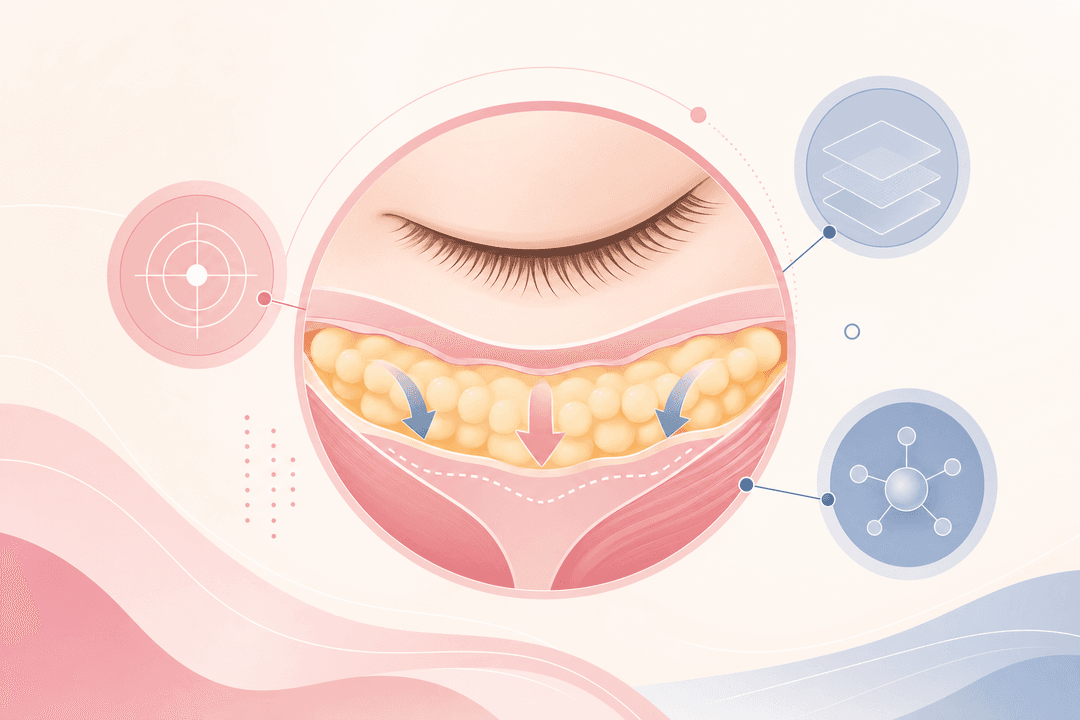
Ultimately, lower eyelid fat repositioning can be narrowed down to three criteria: skin elasticity, amount of fat, and acceptable recovery period.
If skin elasticity is 0.6 or higher and the amount of fat is moderate or less (less than 5mm of orbital fat protrusion), the non-incisional + laser-assisted method is the most efficient. You can expect a recovery of 3-5 days and a graft success rate of over 80%. On the other hand, if elasticity is below 0.4 or skin sagging is present, an incisional approach is necessary to ensure maintenance.
If the recovery period is absolutely critical (e.g., due to an overseas business trip schedule), check the laser type. Procedures performed at facilities with Er:YAG or dual-mode lasers can minimize swelling duration. However, the outcome varies depending on the medical professional's skill in setting the laser power, so it is safer to seek a specialist with over 100 prior procedures.
- Skin elasticity R2 0.6 or higher + less than 5mm fat protrusion → Non-incisional + laser recommended
- Skin elasticity below 0.4 + accompanying skin sagging → Incisional approach required
- Choosing a specialist with over 100 laser procedure experiences reduces complication rate from 4.2% to 1.8%
Non-Incisional vs. Incisional: Characteristics by Method
Non-Incisional (Conjunctival Approach) [Recovery Focused]
- Recovery Period: 3-5 days (with laser)
- Graft Success Rate: 80-84%
- Indications: Skin elasticity 0.6 or higher
- Scar: None
For those in their 20s-30s with no skin sagging
Combined with Skin Incision [Long-Term Maintenance]
- Recovery Period: 7-10 days
- Graft Success Rate: Over 90%
- Indications: Skin elasticity below 0.4
- Scar: 2-3mm (under eyelashes)
For those over 40 or requiring removal of excess skin
Laser-Assisted Technique [Improved Graft Success]
- Additional Cost: 300,000-500,000 KRW
- Graft Success Rate: 89% (Dual Mode)
- Swelling Reduction: 4.2 days
- Laser: Er:YAG or Dual
For prioritizing recovery time
Find the Method That Suits Your Condition
20s-30s, good skin elasticity, recovery within one week essential
Non-incisional + Er:YAG laser-assisted repositioning
Graft success rate over 84%, swelling 3-5 days allows return to daily life
Over 40s, with accompanying skin sagging, desire to minimize revision surgery
Combined with skin incision + multi-layer fixation
Excess skin removal ensures over 90% maintenance, revision surgery rate below 3%
High cost burden but recovery speed is important
Basic non-incisional method (without laser)
Cost savings (300,000-500,000 KRW), can compromise with 5-7 day recovery
Significant fat volume (over 7mm), accompanied by dark circles and pigmentation
Combined with skin incision + fat grafting
Repositioning alone is insufficient; fat grafting balances volume
Common Misconceptions
Misconception Non-incisional methods always recover faster.
Truth Recovery time varies from 3 to 10 days depending on the fat fixation method. Simple repositioning, even non-incisional, takes over 7 days, and only laser-assisted multi-layer fixation shortens it to 3-5 days.
Misconception Lasers melt away fat.
Truth Er:YAG lasers do not melt fat cells; they shrink surrounding connective tissue to fixate the fat. In fact, graft success rates improve by 32%, and at appropriate power levels (5-8 J/cm²), fat loss does not occur.
Must-Check Items Before the Procedure
- If a non-incisional method is recommended without skin elasticity measurement (Cutometer R2 value), the 1-year maintenance rate may drop to 45%.
- Failing to check the laser type (CO2/Er:YAG/Dual) can result in a twofold difference in graft success rates.
- Skipping cold compresses more than 6 times a day within 72 hours post-procedure can extend swelling by 3-4 days.
- Anticoagulants such as aspirin and omega-3 should be discontinued 7 days prior to the procedure to reduce bruising incidence by 60%.
- Definitive advertising phrases like '3-day recovery guaranteed' are violations of medical advertising laws; be cautious of facilities using such expressions.
Frequently Asked Questions
How many days until I can return to work?
Laser-assisted non-incisional methods take 3-5 days, while basic non-incisional methods take 5-7 days. However, if bruising is severe, it may take 7-10 days. Therefore, plan to discontinue anticoagulants and use cold compresses before the procedure.
Can the fat protrude again?
If skin elasticity is 0.6 or higher and multi-layer fixation is applied, the 1-year maintenance rate is 82%. With elasticity below 0.4, the non-incisional method drops to 45%, so an incisional approach is recommended in such cases.
Is the effect similar without using a laser?
The graft success rate differs significantly: 58-70% without laser and 84-89% with laser. The laser also shortens the recovery period by 4.2 days, so it is recommended if your budget allows.
I'm in my 40s, can I have a non-incisional procedure?
Skin elasticity measurement is the key. If the R2 value is 0.6 or higher, it is possible, but if it's below 0.4, an incisional approach is necessary. Elasticity values are more decisive than age.
What are the side effects?
Common side effects include swelling (3-10 days), bruising (5-14 days), and temporary excessive tearing (2-3 weeks). Rare complications include fat necrosis (0.8%), conjunctival burns (3% with excessive laser power), and dry eyes (1.2%). Choosing a specialist with over 100 procedures reduces the complication rate to 1.8%.
Why is there a twofold difference in cost between clinics?
The difference is due to the presence of laser equipment (300,000-500,000 KRW), fixation technique (multi-layer vs. single-layer), region (Gangnam premium 300,000-400,000 KRW), and the medical professional's experience. Lower quotes likely do not include lasers and use single-layer fixation, so inquire about the detailed techniques.
Lumi's Word
If you are considering lower eyelid fat repositioning in 2025, ask 'how the fat is fixed' before asking about incision. The type of laser and fixation depth can significantly alter both recovery time and graft success rate. Come back anytime you have more questions about procedures.
This content is for informational purposes only and does not substitute medical advice. Always consult with a specialist before undergoing any procedure. Results may vary depending on individual skin condition, fat volume, and elasticity, and effectiveness is not guaranteed.